
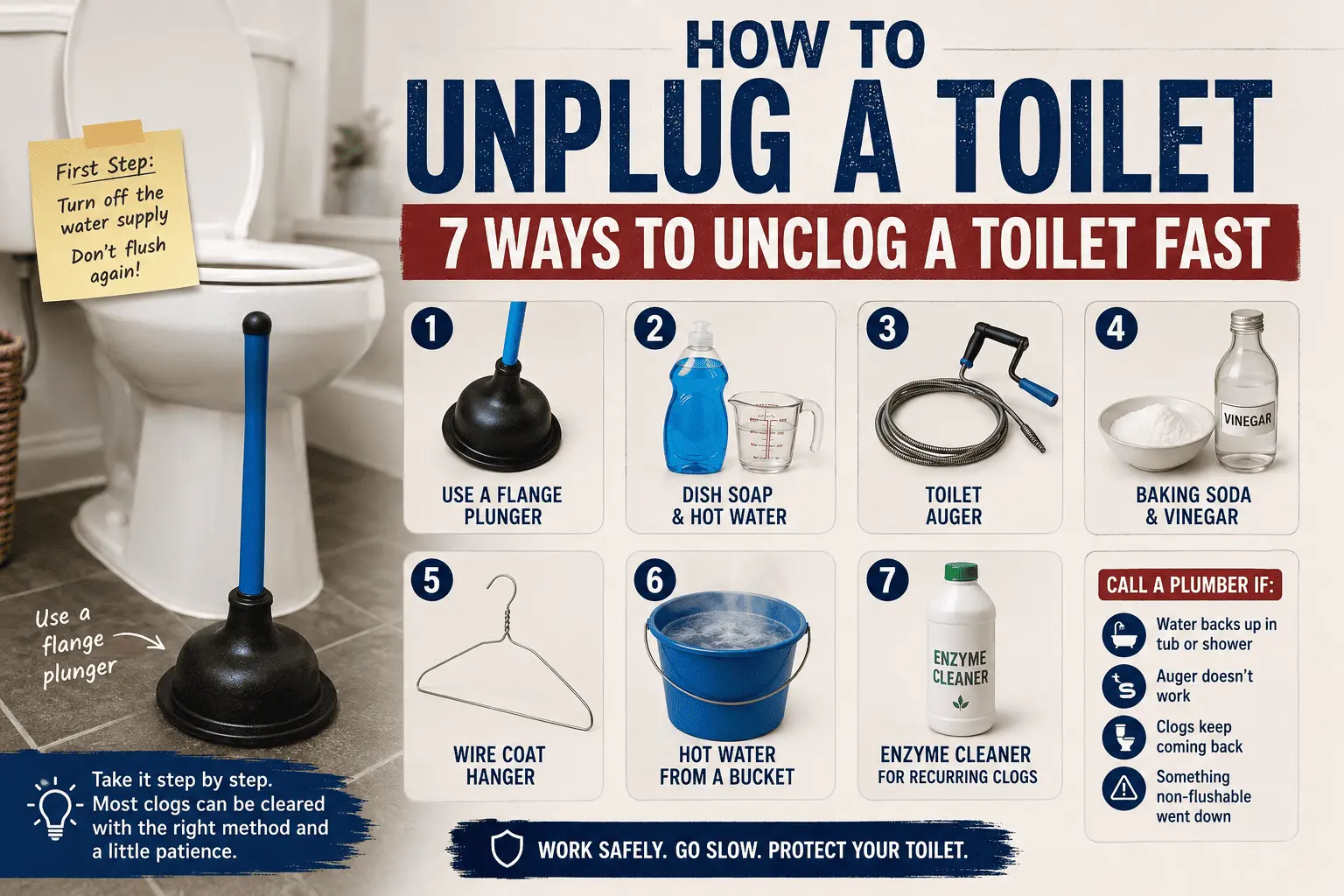
How to Unplug a Toilet: 7 Ways to Unclog a Toilet Fast
Water’s creeping toward the rim and you’re standing there gripping a plunger, half-convinced you’re about to make this worse. You won’t. Ninety percent of the time a clogged toilet is just paper and waste jammed in a bend, and you can knock it loose in the time it takes to boil a kettle.
Below are seven ways to clear it, roughly in the order I’d actually try them.
First, Don’t Flush Again
If the bowl’s already near the top, resist the urge to flush and “see if it goes down.” That’s how a slow drain turns into water on your bathroom floor. Reach behind the tank, find the oval shutoff valve, and turn it clockwise until it stops. Now you can work without racing the water line.
1. Get a Flange Plunger — the Flat Cup Kind Won’t Cut It
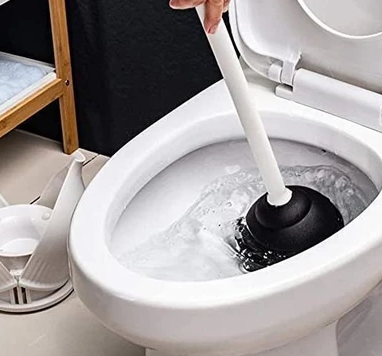
There are two plungers sold at every hardware store, and half the people fighting a clog are using the wrong one. A flange plunger has a second, smaller rubber flap that folds out from the main cup. That flap tucks into the toilet’s drain opening and seals it properly. The flat cup plungers made for sinks just sit on top of a curved bowl and squirt half their force out the sides.
Here’s the actual technique, not just “plunge until tired”:
Submerge the whole plunger before you start. An air pocket in the cup absorbs your push instead of transferring it.
Angle it into the drain first, then straighten up — this bleeds out trapped air that would otherwise cushion the blow.
Fifteen or so firm strokes, steady pace, no wild flailing.
The upstroke matters as much as the downstroke. Yank it back hard on your last pull; that suction can drag a clog backward just as well as pushing drives it forward.
Flush once to check. Still sluggish? Do another round before you give up on this method — most people quit one round too early.
2. Dish Soap and Hot Water
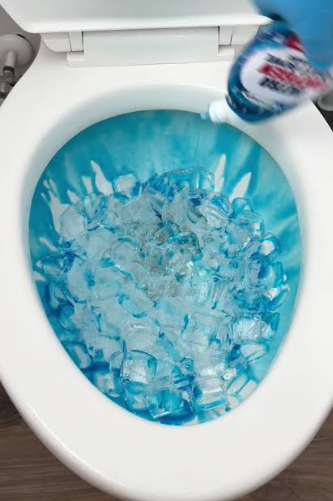
This one surprises people because it feels too simple. Squeeze a good amount of dish soap into the bowl — a few tablespoons, don’t be shy — then pour in two or three cups of hot tap water. Not boiling. Boiling water against cold porcelain is how you end up with a hairline crack and a much bigger problem than a clog.
Give it 10 to 15 minutes to work down through whatever’s blocking the trap, then plunge. I’ve seen this finish off clogs that a plunger alone only half-cleared, because the soap acts as a lubricant while the plunger does the mechanical work.
3. Bring in a Toilet Auger
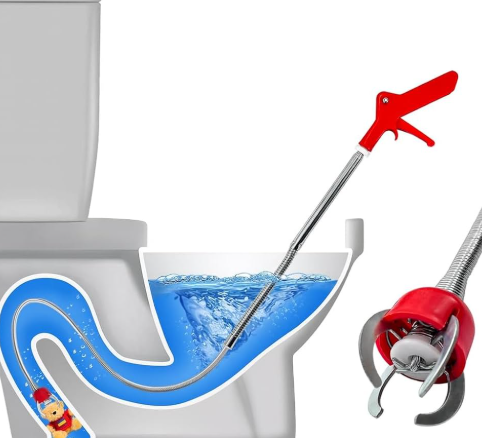
When plunging does nothing, the blockage has usually migrated past where a plunger’s suction can reach — down into the trap itself. This is what a closet auger (sometimes just called a toilet auger) is built for: a coiled cable inside a tube with a crank on one end.
Feed the rubber-tipped end into the drain, angled down.
Turn the crank clockwise while you slowly push the cable forward.
When it stops or you feel it catch something, keep cranking gently — you’re either breaking through or hooking whatever’s stuck.
Draw the cable back out slowly, then test with a flush.
Don’t grab a regular drain snake for this job. Its metal tip will scratch porcelain in seconds. The auger’s rubber sleeve exists specifically to protect the bowl, which is the whole reason it costs more than a plain snake.
4. Baking Soda and Vinegar
This isn’t going to punch through a solid blockage — don’t expect miracles here. But for a toilet that’s draining slow rather than fully stopped, it’s a reasonable first move before you touch anything chemical. One cup of baking soda in, then two cups of white vinegar. It’ll fizz. Let that reaction sit for half an hour, then flush.
It won’t win against a lodged toy or a wad of paper towels, but it’s gentler on your pipes than the blue stuff under the sink, and it costs about forty cents.
5. Wire Coat Hanger, If That’s Genuinely All You’ve Got
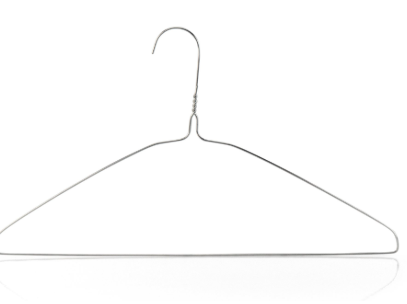
Straighten out a wire hanger, wrap the working end in a rag or a plastic bag and tape it down so bare metal never touches the bowl, and feed it in carefully. Twist and push in short motions rather than jamming it forward.
Treat this as a last resort, not step one. It exists in this list because sometimes it’s 11 p.m., the hardware store is closed, and you need something that works tonight. An auger will always do the job better and safer.
6. Hot Water From a Bucket
For a toilet that’s clogged but the water level is still manageable, pour hot tap water in from about waist height rather than right at the rim. The combination of heat and the force of the pour can shove a soft clog through on its own. Start slow — you’re watching the water level the whole time — then pick up the pace once you’re confident it’s draining rather than rising.
7. Enzyme Cleaner for the Toilet That Keeps Coming Back
If the clog clears but the toilet’s been draining slower and slower over weeks, that’s not really a clog — it’s buildup. An enzyme-based cleaner (check the label, not a caustic acid one) breaks that down gradually. These are septic-safe and won’t eat away at older pipes the way a harsh chemical cleaner can.
When It’s Time to Call Someone
Most clogs give up somewhere between the plunger and the auger. Stop trying to fix it yourself and call a plumber if:
Water backs up into the tub or shower when you flush the toilet. That’s a sign the problem is in the main line, not the toilet itself, and no amount of plunging fixes that.
You’ve genuinely tried the auger and nothing’s changed after a few attempts.
The same toilet keeps clogging every few days no matter what you do — that pattern usually means something further down the system.
You know something non-flushable went down — a toy, a phone, whatever. An auger can shove it deeper instead of pulling it out, so it’s worth having a professional assess it before you make it worse.
There’s no shame in this one. Toilets clog for reasons that have nothing to do with what you did wrong, and some of those reasons live past the point any home tool can reach.
FAQs
Do I need a special plunger for a toilet?
Yes. Get a flange plunger, not the flat cup one meant for sinks. The flange seals against the curved drain opening properly, so your effort actually pushes the clog instead of leaking out around the plunger.
Can I use bleach to unclog a toilet?
Don’t. Bleach doesn’t break down solid clogs at all, and mixing it with certain other cleaners produces fumes that are genuinely dangerous in a small bathroom. Stick to dish soap, baking soda and vinegar, or an enzyme cleaner.
Why does my toilet clog so often?
Usually one of three things: an older low-flow model that doesn’t generate enough force per flush, too much paper going down at once, or a partial blockage further down the line that never fully clears between flushes. If it’s happening weekly, get a plumber to check the line rather than keep fighting it yourself.
Is it safe to pour boiling water into a toilet?
No — the sudden temperature change can crack porcelain, especially on an older toilet. Hot tap water does the job without that risk.
How long should I wait before plunging again after adding soap or vinegar?
Give it 10 to 30 minutes. Plunging right away just wastes the time you spent letting it work.
Will a clogged toilet clear itself?
Sometimes, if it’s a minor paper clog. But don’t count on it, and definitely don’t keep flushing to test — that’s the fastest way to end up with water on the floor.