
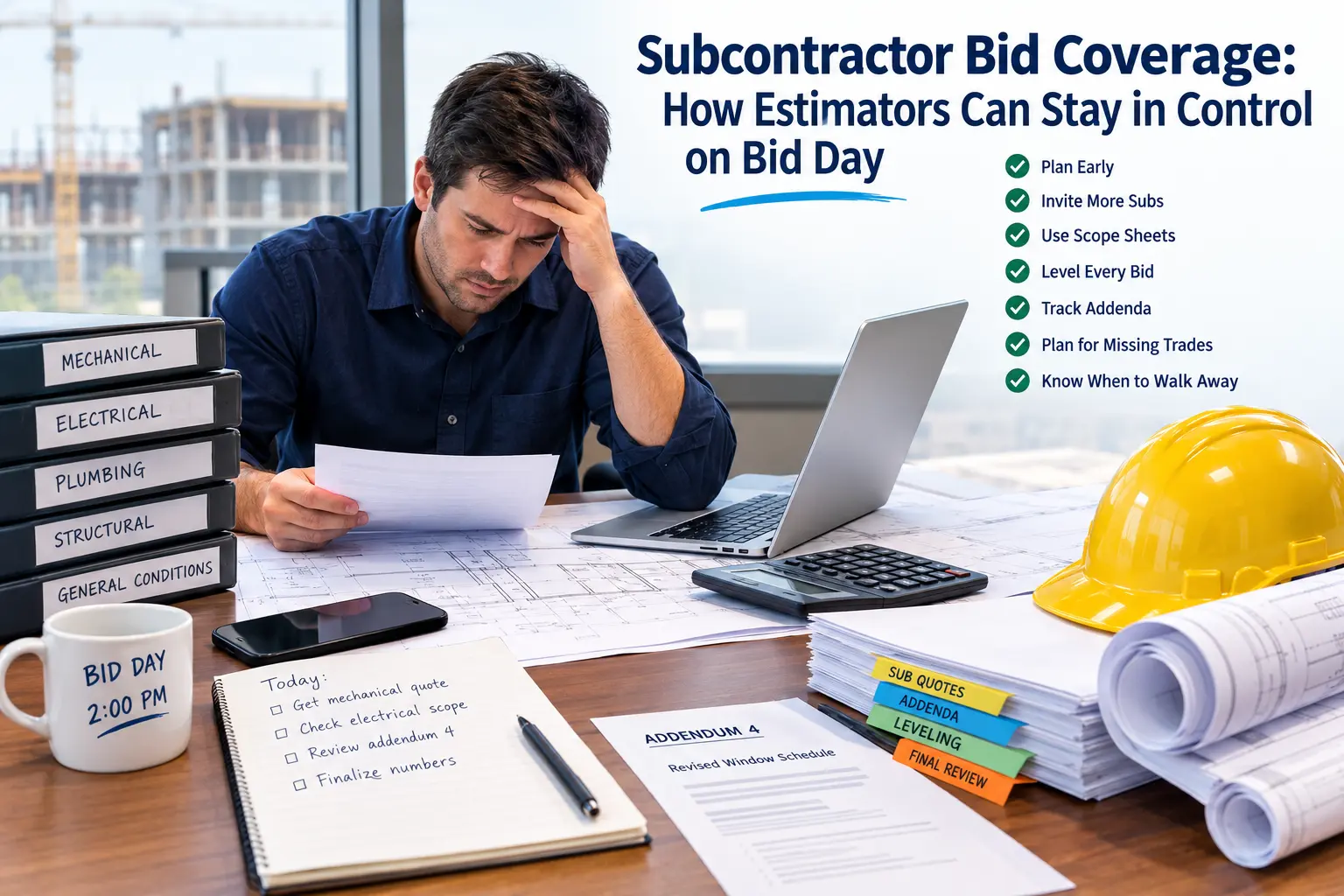
Subcontractor Bid Coverage: How Estimators Can Stay in Control on Bid Day
It’s 1:15 p.m. Bids are due at 2:00. You still don’t have a mechanical number. The electrical sub just emailed a quote that excludes half the scope. Addendum 4 came out last night and changed the window schedule. And your phone won’t stop ringing.
If you’ve been estimating for any length of time, you know this feeling. Bid day is where good estimates go to die.
The problem isn’t usually your skills. It’s the process. Sub proposals arrive in the final hours, all in different formats, each with its own idea of what’s included. Under that kind of pressure, it’s easy for something to fall through the cracks. And poor subcontractor bid coverage costs work. One 2025 industry survey reported by Construction Dive found that 18% of missed bids were tied directly to incomplete subcontractor coverage.
The good news is that most bid-day chaos can be prevented. It just has to start weeks before bid day.
Why Bid Day Gets So Chaotic
A few things pile up at once.
Subs wait until the last minute. Many subcontractors are bidding several jobs at once. They send numbers late, partly because they’re busy and partly to stop their prices from being shopped around.
Every sub defines scope differently. One concrete sub includes concrete finishing. Another excludes it. One glazing sub includes all window types on the schedule. Another only covers storefront. Comparing them side by side without leveling is like comparing apples to cinder blocks.
Addenda show up late. Last-minute changes don’t give you time to redo takeoffs, and subs may not have even seen them.
Some trades are just thin. In a tight labor market, you might only get one or two bids on a trade, or none at all.
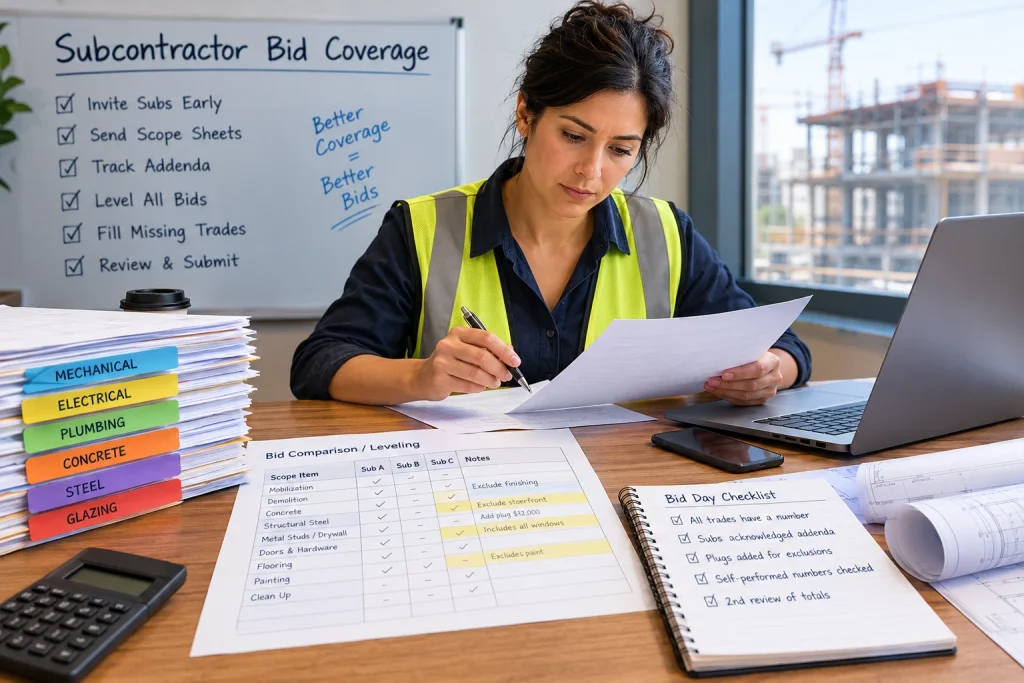
7 Ways to Take Control of Bid Day
1. Build a Bid Calendar the Day You Get the Job
Work backward from the due date. Set dates for sending invitations, the pre-bid meeting, the RFI deadline, sub quote follow-ups, and your internal review. Then add an internal deadline a couple of hours before the real one. Treat that as your actual deadline.
2. Invite More Subs, and Invite Them Early
If you want three good numbers on a trade, invite eight or ten subs. Many won’t respond. Send invitations as early as possible and follow up a week out and again two days out. A quick phone call often works better than a third email.
Keep a list of which subs actually bid and how complete their scopes tend to be. Over time, you’ll know exactly who to rely on.
3. Send a Scope Sheet with Every Invitation
Don’t just send drawings and hope subs figure out what you want. Include a short scope sheet for each trade listing exactly what should be in their price. For example, does the sitework sub carry the sewer line up to five feet from the building, or does the plumber pick it up from there?
The clearer your scope sheet, the easier your leveling will be.
4. Level Every Bid the Same Way
Set up a simple leveling spreadsheet for each trade. List every scope item down the side and each sub across the top. As quotes come in, check off what each one includes and fill in what’s missing.
If a sub excludes something, add a “plug” number to their price so you’re comparing totals fairly. The lowest number on paper often isn’t the lowest number once it’s leveled.
5. Keep an Addenda Log
Track every addendum: what changed, which trades it affects, and whether each sub acknowledged it. Ask subs to list the addenda they’ve included on their quote. If they don’t, call them. A missed addendum can wreck a number.
6. Have a Plan for Missing Trades
Sometimes you won’t get a sub number at all. Don’t panic and throw in a random figure. Price it yourself using your own takeoff and current unit costs, then add a reasonable cushion. Our concrete and steel cost estimation worksheet guide is a good example of how to build a self-performed number from scratch.
7. Know When to Walk Away
If you can’t get coverage on major trades, the scope is unclear, and the addenda keep coming, it might be smarter not to bid. Submitting a number you don’t believe in is worse than submitting nothing.
A Simple Bid-Day Checklist
On bid day, confirm that every trade has at least one leveled number, every sub has acknowledged all addenda, you’ve added plugs for any excluded items, your self-performed numbers are checked, and someone else has looked over the totals before you hit submit.
Common Questions
What is subcontractor bid coverage?
It means having enough reliable sub quotes for each trade so you can price the work accurately and competitively.
What is bid leveling?
It’s the process of comparing sub quotes side by side, adjusting for differences in scope, so you’re comparing equal work.
How many sub bids should I get per trade?
Aim for at least three leveled bids on major trades. To get that, you’ll usually need to invite far more subs than that.
The Bottom Line
Bid day will always be stressful. But the estimators who handle it well aren’t working harder in those final hours. They did the work weeks earlier: clear scope sheets, early invitations, steady follow-up, and a leveling process they trust.
Scope gaps on bid day often start with incomplete drawings, so check out our guide on estimating incomplete construction drawings. And if subs are hard to find in your area, our article on the construction labor shortage explains why.
What’s your worst bid-day story? Share it in the comments, and subscribe to get more practical estimating guides.