
What Is Compaction of Concrete? Methods, Benefits and How It’s Done
What Is Compaction of Concrete?
Pour a batch of wet concrete and look closely, and you’ll notice something most people never think about: it’s full of air. Not a little either. Somewhere between 5 and 20 percent of that freshly mixed concrete is trapped air bubbles, hiding in every corner of the pour. Compaction is simply the process of getting rid of that air before the concrete sets, so what’s left is a dense, solid mass instead of something riddled with tiny gaps.
Think of it like packing a suitcase. Throw everything in loosely and you’ll have wasted space and things shifting around. Press down, shake it out, work the gaps closed, and suddenly everything fits tighter and holds together better. Concrete works the same way. Vibrate it, tamp it, or work it properly, and those air pockets rise to the surface and escape, leaving behind concrete that’s stronger, denser and far less likely to let you down.
Skip this step, or rush it, and you’re building in weakness from day one. It’s one of those jobs that’s invisible once the concrete cures, but its absence shows up years later in cracked driveways, crumbling footpaths and foundations that fail well before they should.
Why Bother Concrete Compacting at All?
Here’s the thing that surprises a lot of people: even a small amount of trapped air makes a big difference. Leave around 5 percent air in the mix and you can lose roughly 30 percent of the concrete’s compressive strength. That’s not a rounding error, that’s the difference between a slab that lasts decades and one that needs replacing far too soon.
Properly compacted concrete bonds better around steel reinforcement, resists water and chemicals seeping in and corroding that steel, finishes smoother, and simply lasts longer out in the weather. It’s a five or ten minute job on a small pour that pays off for years. Given the alternative is redoing the work, or living with cracks, it’s hard to argue it’s not worth doing right.
The Main Ways of Concrete Compaction
There isn’t one “correct” method here. Tradies pick based on the size of the job, how thick the section is, and what gear happens to be on the truck that day.
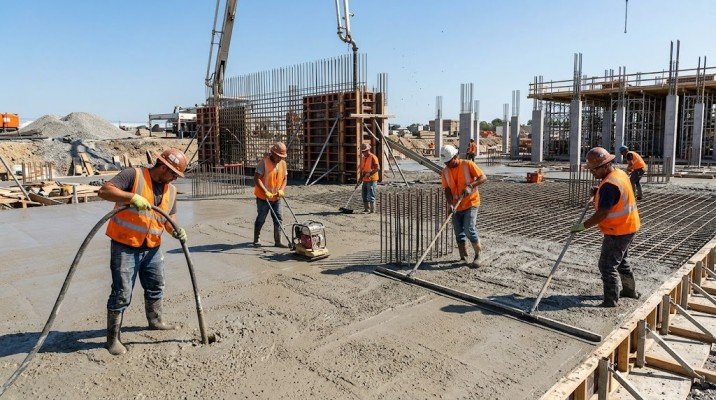
Internal (needle) vibration is the one you’ll see most often on site. A poker vibrator gets pushed straight down into the wet concrete, and the vibration shakes trapped air loose so it can rise to the surface. It’s quick, reliable, and does a great job on thicker pours like columns and beams.
External vibration comes in when the internal vibrator simply can’t get where it needs to go, usually inside narrow or heavily reinforced formwork. Instead of going into the mix, the vibrator clamps onto the outside of the formwork and shakes the whole thing.
Surface vibration, using vibrating screeds or plate compactors, is the go-to for flat work. Driveways, footpaths, slabs, anything wide and shallow, this is worked across the top and levels the surface at the same time it compacts it.
Vibrating tables show up mostly in precast work, where moulds for pavers, blocks and panels sit on a table that vibrates the whole mix from underneath. Very consistent, which matters when you’re producing the same item over and over.
Rodding is the manual, old-school option, pushing a steel rod repeatedly into the concrete to force air out by hand. Slower, more labour intensive, but it still works fine on small pours where machinery isn’t practical.
Tamping is similar in spirit, pressing a tamping bar down onto the surface repeatedly. It’s mainly reserved for shallow slabs and paths where a rough, even level is really all that’s needed.
So Which One Should You Use?
For most jobs around homes and small commercial sites, internal vibration for the bulk of the pour and surface vibration for finishing the top covers nearly everything. Bigger precast operations lean on vibrating tables for consistency. Rodding and tamping still earn their keep on small, tight-budget or hard-to-reach jobs where dragging out heavier equipment doesn’t make sense.
Conclusion
Compaction isn’t a box to tick at the end of a pour, it’s what decides whether the concrete actually lives up to the strength it’s rated for. Pick the right method, take the extra few minutes to do it properly, and you’re the difference between concrete that’s still standing strong in thirty years and concrete that’s cracking within one.