
Chicken Mesh in Construction: Uses, Purpose and Types
What Is Chicken Mesh?
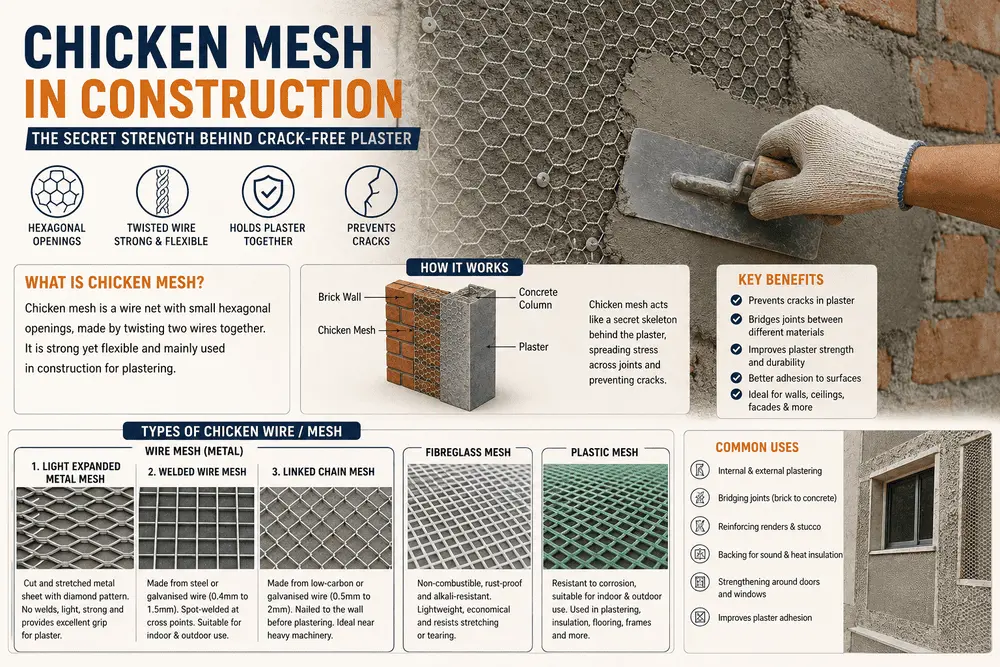
Similar to a honeycomb, chicken mesh is a wire net with tiny hexagon-shaped openings. It is created by repeatedly twisting two wires together. The mesh is made sturdy by this twisting, but it is still flexible enough to be bent and shaped. It is mostly used by builders for plastering.
Chicken Mesh in Construction
Workers frequently attach chicken mesh to a wall before plaster is applied. The mesh resembles a secret skeleton behind the plaster. It keeps the plaster cohesive and prevents it from fracturing over time.
There are several frequent causes of plaster cracking. Materials expand and contract in response to temperature changes. As plaster dries and cures, it also slightly contracts. Additionally, occasionally cracks are just the result of hurried or negligent construction. All three issues are mitigated by chicken mesh.
The chicken mesh is most crucial where two different materials come together, like a brick wall joining a concrete column. Brick and concrete are not the same thing. They age, shrink, and expand at different rates. This mismatch creates stress at the joint, which starts a crack. A strip of chicken mesh keeps the plaster from shattering by spreading the force over that joint.
What Is Chicken Mesh / Wire?
Chicken wire is just another name for chicken mesh. The name comes from its original use, fencing off chicken coops on farms. In construction, “chicken wire” and “chicken mesh” mean the same thing.
Types of Chicken Mesh / Wire
There are three main types of chicken wire used on site: wire mesh, fibreglass mesh, and plastic mesh.
Wire mesh
Wire mesh is the classic, most familiar type. It comes in three forms.
1. Light expanded metal mesh
Workers cut and stretch a sheet of metal until it forms a diamond pattern. There are no welds or joints anywhere on it, which keeps it light and strong. Its rough, ribbed surface grips plaster well.
2. Welded wire mesh
This is made from thin steel or galvanised wire, usually 0.4 mm to 1.5 mm thick. The wires cross each other at right angles and get spot-welded at every crossing point. It handles rough or uneven walls easily and works both indoors and outdoors.
3. Linked chain mesh
Some call this micro chain wire mesh. It is built from thin low-carbon or galvanised wire, around 0.5 mm to 2 mm thick. Workers nail it straight onto the wall before plastering. It is a good pick near heavy machines, since it copes well with constant vibration.
Fibreglass mesh
Fiberglass chicken mesh is a more modern choice. It will not burn, and it will not rust either, since it stands up well to alkalis in cement. It is light, affordable, and resists stretching or tearing. Builders use it a lot on facades, internal walls, and ceilings.
Plastic mesh
Plastic chicken mesh skips metal altogether. It suits both indoor and outdoor jobs. Its use goes beyond plastering too. It helps with floor pouring, sound insulation, heat insulation, and reinforcing around door and window frames. The gaps in plastic mesh are usually square or rectangular, and it works well across long stretches of wall.
Uses and Purpose of Chicken Mesh
At its core, chicken mesh is there to stop cracks. But it does more than that on a job site:
- Strengthens plaster on inside and outside walls
- Bridges joints between different materials, like brick and concrete
- Adds extra strength to renders and stucco finishes
- Backs up insulation for sound and heat
- Reinforces the areas around door and window frames
- Helps plaster stick better to the surface
FAQs
What is chicken mesh made of?
Most types use low-carbon steel wire or galvanised wire. Some are made from fibreglass or plastic instead.
Why do builders use chicken mesh in plastering?
It keeps plaster from cracking when temperatures change, when plaster shrinks while drying, or where two different materials sit side by side.
Where does chicken mesh get used most?
Mainly at joints between different materials, like brick meeting concrete, and across large plastered wall areas.
Is fibreglass mesh better than wire mesh?
Not exactly better, just different. Fibreglass resists rust and fire well. Wire mesh is stronger mechanically. The right choice depends on what the site needs.
Can plastic mesh handle outdoor conditions?
Yes. It works fine both indoors and outdoors, and it will not corrode like metal can.