
Concrete Spalling: What It Is, Why It Happens, and How to Stop It
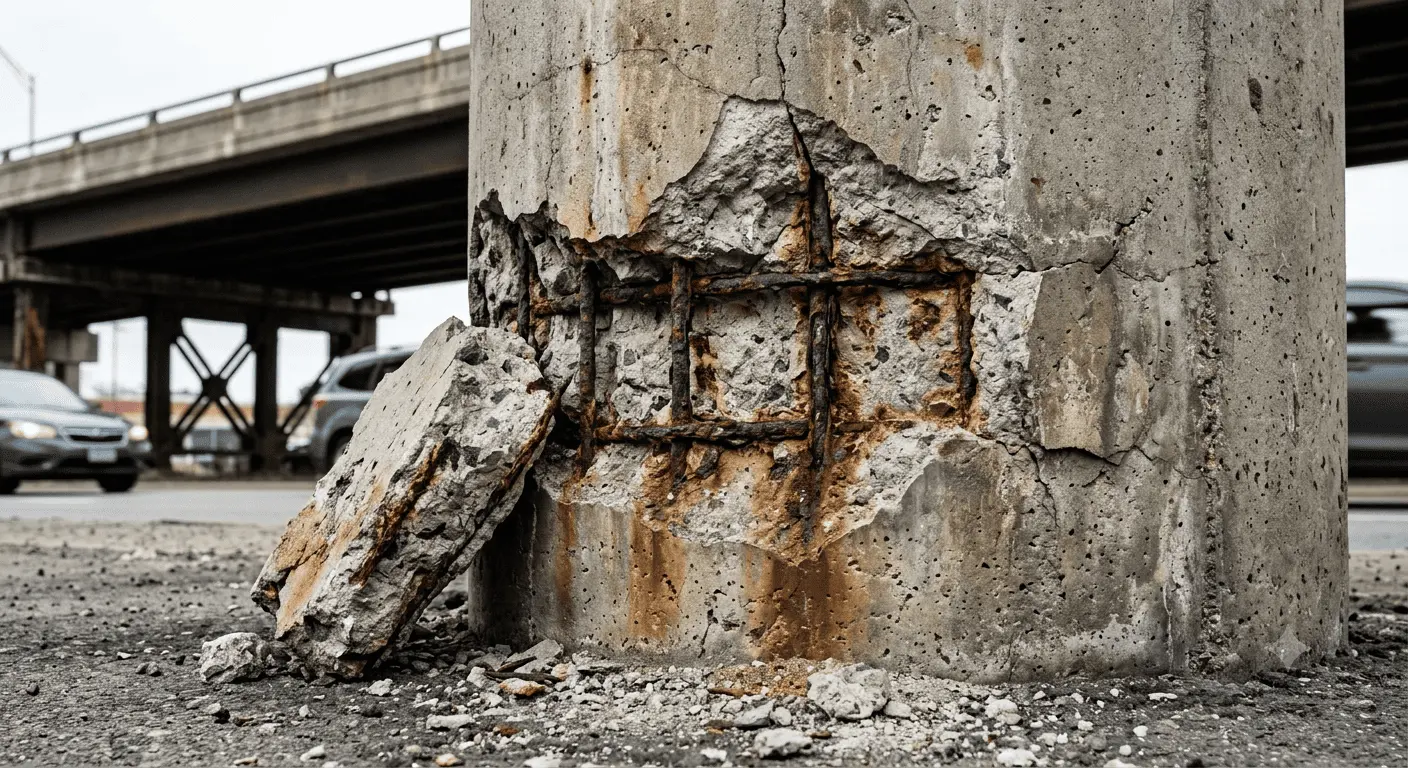
Concrete spalling is when the top layer of concrete breaks off in flakes or chunks. It’s not just a surface thing, something is going wrong deeper inside the concrete too. Sometimes you can even see the metal rods, called rebar, poking out through the broken bits. Seen a driveway, balcony, or pillar with chunks of concrete falling off? That’s spalling.
What Causes Concrete Spalling?
A few things usually cause it.
Water is a big one. Concrete has lots of tiny holes in it, so water soaks in pretty easily. When that water freezes, it turns to ice, and ice takes up more space than water. So it pushes against the concrete from inside, and after enough freezing and melting, pieces start breaking off. Simple as that.
Rusting steel bars cause even more damage though. Concrete has steel bars inside it to make it stronger, but if water and air sneak in through small cracks, the steel starts rusting. And rust is bigger than plain steel. As it grows, it pushes the concrete apart from the inside, kind of like a balloon slowly inflating inside a wall.
Bad construction work is another reason, and it’s more common than people think. If concrete is mixed with too much water, or it doesn’t get enough time to dry, or the steel bars are placed too close to the surface, the whole thing ends up weaker. Sometimes this kind of spalling doesn’t even show up for years.
Salt speeds things up a lot too. Whether it’s salt used to melt ice on roads, or just salty air near the ocean, it makes steel rust way faster. That’s part of why buildings near the coast tend to spall quicker than ones further inland.
And sometimes it’s just physical damage. Something heavy pressing down for too long, or a hard hit on the edge of a slab. Edges and corners are usually thinner, so they’re the first to chip.
Concrete Column Spalling and Foundation Spalling
Not every kind of spalling is equally serious. Concrete column spalling is a bigger deal because columns hold up the weight of a whole building. If rust breaks the concrete around a column and you can see the steel, that column might not be as strong as it used to be. This is not a fix-it-yourself job, you call an engineer.
Concrete spalling foundation issues matter a lot too. Foundations sit underground, so they’re always around moisture. If a foundation starts spalling, it’s usually a sign of something else going wrong, bad drainage, water building up near the base, maybe even a hidden pipe leak. If you just patch the concrete without fixing the water problem, it’ll come back.
Concrete surface spalling is usually the least serious kind. It’s the type you see on driveways, pool decks, or garage floors, where only the top bit is chipping away. Mostly caused by freezing and melting, or a weak top layer of concrete. Doesn’t look great, but it’s rarely dangerous.
How to Fix Concrete Spalling
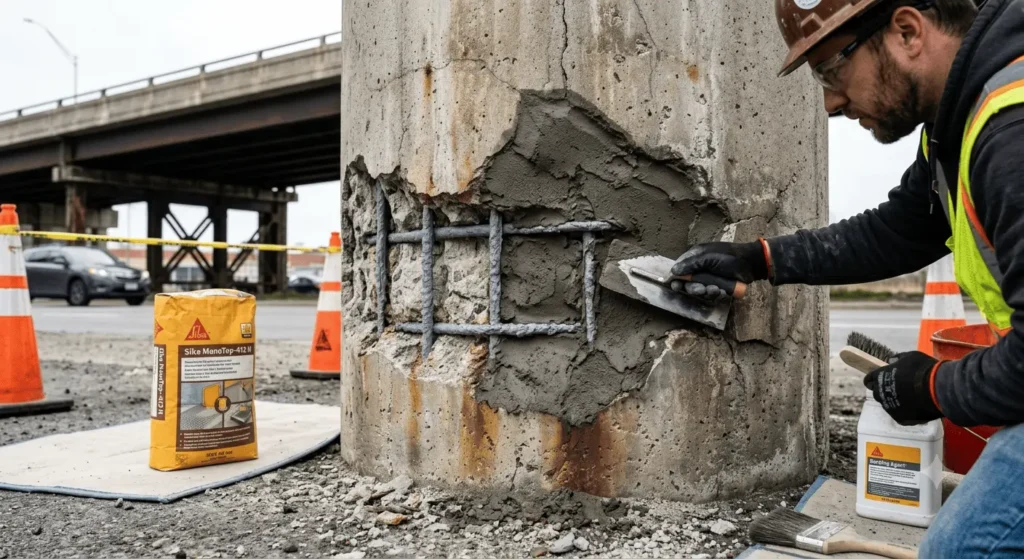
A proper concrete spalling fix follows roughly the same steps every time. First, figure out what’s actually causing it, because there’s no point patching over a leak that’s still letting water in. Then remove the damaged concrete until you hit solid material, cleaning off any rusted steel along the way. Coat the exposed steel with a rust-proof primer, or replace it if too much has rusted away. Add a bonding layer, then fill the spot with repair mortar. Finish by sealing it so water and salt can’t get back in.
Small chips are usually fine to fix yourself with a repair kit from a hardware store. Columns and foundations, though, that’s when you need a professional to take a look first.
Preventing Concrete Spalling
Preventing spalling really just means keeping water and salt away from the steel inside. Good drainage helps a lot, along with resealing the concrete every few years, using enough concrete cover during construction, and fixing small cracks before they turn into bigger problems. In places that get cold winters or sit near the coast, it’s worth using rust-resistant steel or a stronger concrete mix right from the start.
Spalling doesn’t happen all at once. It builds up slowly, sometimes over ten years or more, before anyone notices. Which is why checking your concrete every so often really is the easiest way to catch it early.