
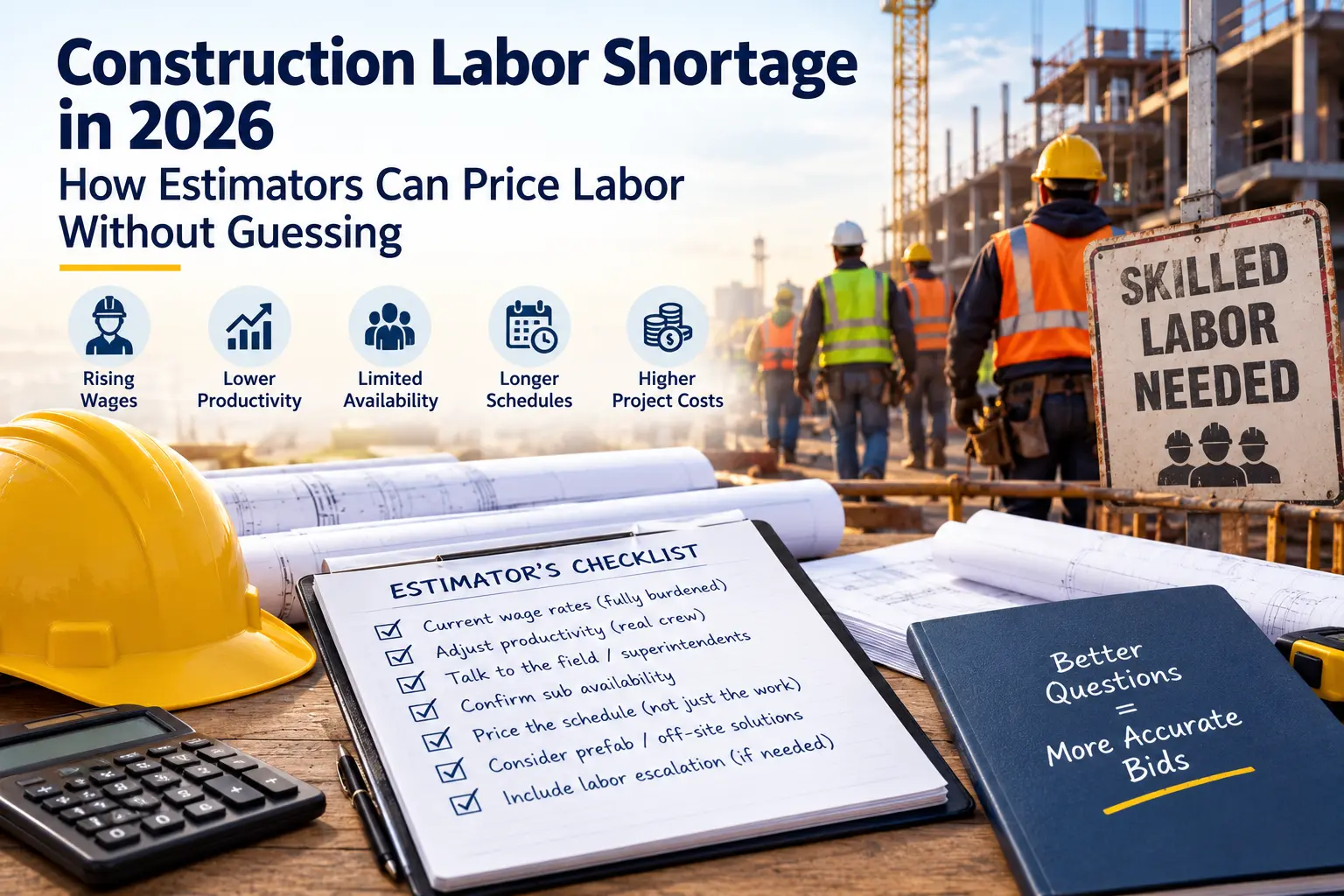
Construction Labor Shortage in 2026: How Estimators Can Price Labor Without Guessing
Materials get all the headlines. Steel prices, tariffs, lumber swings. But ask any experienced estimator what keeps them up at night, and a lot of them will say labor.
Here’s why. You can get a written quote for steel. Nobody gives you a written quote for how fast a crew will work six months from now, how much you’ll have to pay to keep them, or whether they’ll even show up.
The construction labor shortage has made that problem much worse. The Associated Builders and Contractors estimates the industry needs to attract about 349,000 new workers in 2026 and 456,000 in 2027, mostly to replace retirees and keep up with demand. The AGC and NCCER found that seven out of eight construction firms raised base pay last year at the same rate or faster than the year before. And 28% of firms reported being affected by immigration enforcement in the six months before their survey.
All of that lands on the estimator’s desk. So let’s talk about why labor is so hard to price right now, and what you can actually do about it.
Why Labor Is the Hardest Number in Your Estimate
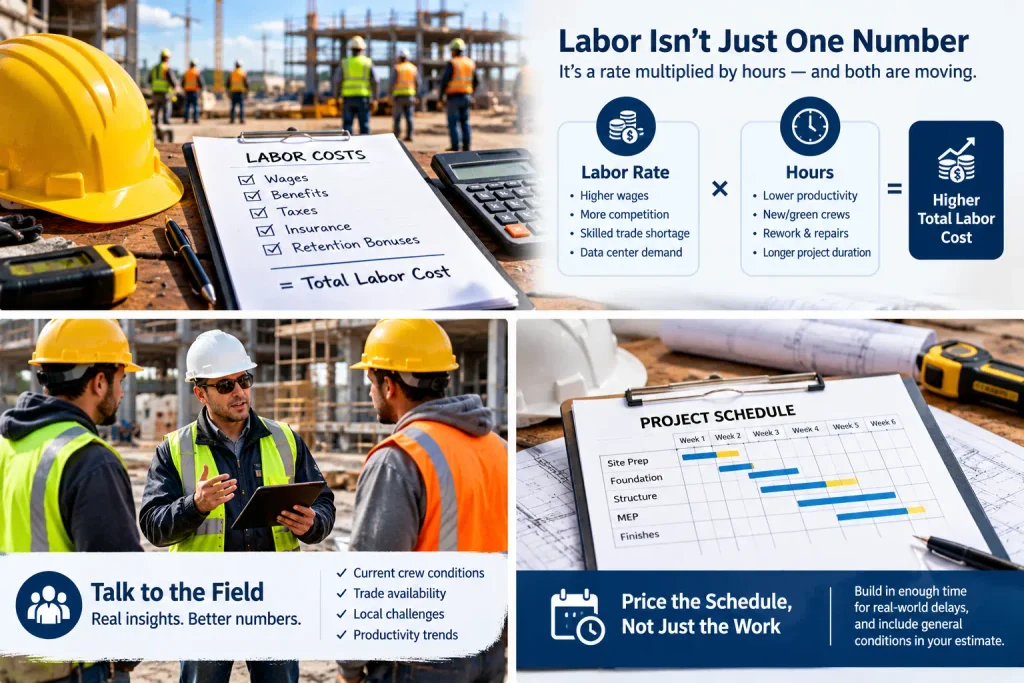
Labor isn’t one number. It’s a rate multiplied by hours, and both are moving.
The rate part is getting more expensive. When contractors fight over the same small pool of electricians, plumbers, and ironworkers, wages go up. Data center projects are making this worse. They pay well and need a lot of skilled trades, so they pull workers away from housing, healthcare, and industrial jobs.
The hours part is trickier. Your productivity numbers probably came from past jobs with experienced crews. But if your crew today is half new hires, they won’t hit those numbers. A framer in his first year doesn’t cut stair stringers as fast as a 20-year veteran. A green concrete crew is more likely to end up with problems like honeycombing that need repair work nobody priced.
Then there’s time. If the job runs long because you can’t staff it, your general conditions keep running too. Supervision, equipment rental, site trailers, insurance. That’s money bleeding out every week.
7 Ways to Price Labor More Accurately
1. Use Current Wage Rates, Not Last Year’s
This sounds obvious, but a lot of estimates still run on labor rates that were set a year or two ago. Check current rates with your payroll team before every major bid. On public work, pull the latest prevailing wage determinations, since those get updated and a stale one can put you way off.
Remember to include the full burden too. Taxes, insurance, benefits, and any retention bonuses you’re paying to keep people. The hourly wage is only part of what a worker really costs you.
2. Adjust Productivity for the Crew You’ll Actually Have
Don’t assume your best crew will be on every job. Ask your superintendents a simple question: who’s realistically going to build this, and how fast do they work?
If the answer is “a mix of veterans and new hires,” build in a productivity factor. Even a 10 to 15% adjustment on labor-heavy activities can be the difference between making money and losing it. It’s much easier to defend that in your bid than to explain a labor overrun later.
3. Talk to the Field Before You Price
Your superintendents and foremen know things your historical data doesn’t. They know which tasks are slowing down, which trades are hard to staff in your area, and which subs are stretched thin.
Spend 20 minutes with them on any big bid. Ask what worries them. You’ll often find a risk you’d never have caught at your desk.
4. Confirm Sub Availability Early
If your plan depends on subcontractors, find out whether they can actually staff the job before you lock in your number. A low sub quote is useless if they can’t put a crew on site until three months after you need them.
Ask subs directly about their current backlog and manpower. If a trade is thin in your market, you might need to carry a higher number or a backup sub. We cover this more in our guide to subcontractor coverage on bid day.
5. Price the Schedule, Not Just the Work
When labor is tight, jobs take longer. Build a realistic schedule first, then price your time-related costs off that schedule. If staffing problems could add three weeks, add three weeks of general conditions. It’s not padding. It’s honest pricing.
6. Look for Ways to Reduce Field Labor
The less work you do on site, the less you’re exposed to labor problems. Prefabricated wall panels, pre-tied rebar cages, factory-built MEP racks, and modular components all move labor into a controlled shop setting. Even simple choices help. Using precise bar bending schedules so rebar arrives cut and bent can save real hours in the field.
Prefab isn’t always cheaper on paper, so compare the full cost, including the labor and schedule risk you’re avoiding.
7. Protect Yourself in the Contract
On long jobs, ask for a labor escalation provision, especially if the project starts more than six months after bid day. If the owner won’t agree, at least state in your bid that pricing is based on current labor rates and a specific start date. If either one changes, you have a basis to talk.
A Quick Labor Reality Check
Before you submit your next bid, ask yourself: Are your wage rates current and fully burdened? Did you adjust productivity for the crew you’ll really have? Have you talked to the field? Do you know your subs can staff the job? Does your general conditions number match a realistic schedule?
If you’re unsure on any of those, that’s where your risk is hiding.
Common Questions
How does the labor shortage affect construction estimates?
It pushes wage rates up and productivity down. Both raise the true labor cost of a job, and if the estimate uses old numbers, the contractor usually absorbs the difference.
What is a labor productivity factor?
It’s an adjustment to your standard labor hours to reflect real conditions, like a less experienced crew, tight working space, or bad weather.
Should I include labor escalation in my bid?
On longer projects, yes. If work starts well after bid day, wages will likely rise in between, and that cost should be accounted for somewhere.
The Bottom Line
Labor has always been the most uncertain part of an estimate. Right now it’s even harder, because the people you’ll need cost more, work at varying speeds, and might be busy on someone else’s job. The fix isn’t a magic number. It’s asking better questions, using current data, and being honest about the crew and schedule you’ll actually have.
Labor is only one piece of the puzzle. Material prices are just as unpredictable right now, so check out our guide to construction material price volatility next.
Have you seen labor costs blow past your estimate on a recent job? Share your experience in the comments, and subscribe to get more practical estimating guides.