
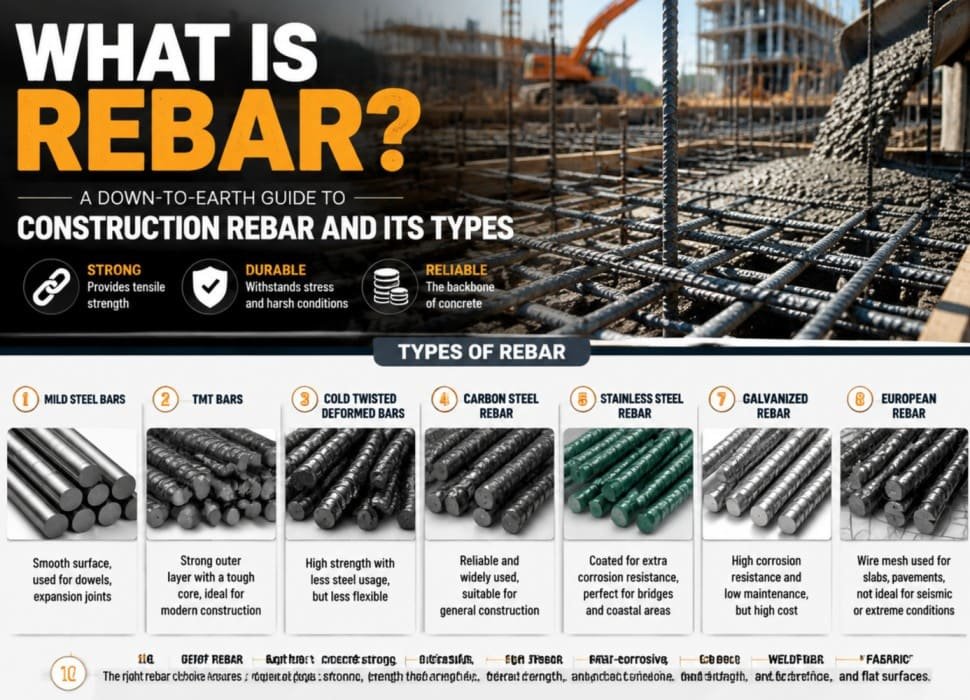
What Is Rebar? A Guide to Construction Rebar and Its Types
Ever driven past a building site and noticed those thin steel rods sticking out of half-poured concrete? That’s rebar. Short for reinforcing bar, and it’s doing more work than you’d think.
So, what is rebar, really? Put simply, it’s steel buried inside concrete to give it backbone. Concrete on its own is tough. It can take a beating from weight pressing down on it. But try to pull or stretch it, and it cracks pretty easily. That’s the gap rebar steel fills. It’s the reason a concrete slab can flex and hold under all kinds of stress without falling apart.
Why Steel, Specifically?
There are other materials out there, sure. But steel keeps winning, and honestly, there are some good reasons for that.
As concrete cures, it shrinks just a little. That shrinking makes it grip the steel bars tight, almost like a hug, and it creates a bond strong enough that the two materials basically start acting as one.
Here’s another neat trick: steel and concrete expand and contract at nearly the same rate when it gets hot or cold. That matching behavior means you don’t end up with hidden stress cracking the structure from the inside out.
Steel also just handles tension really well. It won’t snap the moment something tries to pull it apart. And since it’s wrapped in concrete, it gets some natural protection from rust and rough weather too. Add in the fact that it’s cheap and easy to source, and it’s no wonder steel became the standard.
So, What Are the Types of Rebar?
Not every job calls for the same bar. Builders choose based on budget, weather, and how long the structure needs to last. Here’s a rundown of the types of rebar you’ll actually run into.
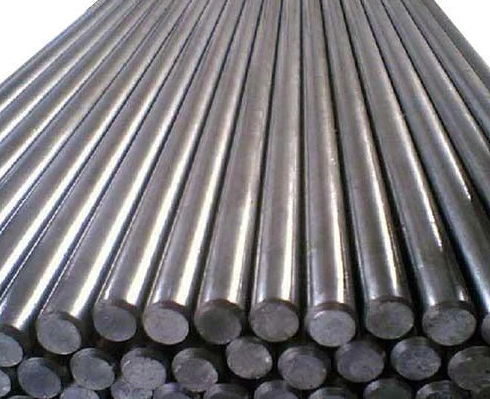
Mild steel bars are your basic, smooth rods, no texture at all. Because they’re so smooth, they don’t hold onto concrete very well on their own, so workers bend hooks into the ends just to keep them anchored. You won’t see these much anymore outside small jobs like dowels or expansion joints.
Deformed steel bars are a different story. They’ve got ribs and ridges running across the surface, which lets them grip concrete way better, so hooks usually aren’t even necessary. This group splits into two main types.
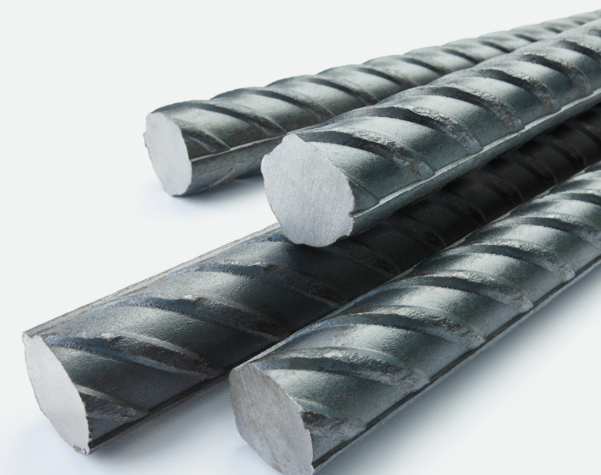
First up, TMT bars, or thermo-mechanically treated bars. These get made by quenching red-hot steel with water jets, which leaves a hard outer shell wrapped around a softer, more flexible core. That combo makes them strong, bendable without breaking, and surprisingly good at standing up to earthquakes. They’re also easy to weld. Honestly, TMT bars are what most modern construction runs on now.
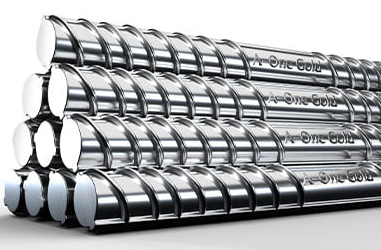
Then there’s cold twisted bars, also known as CTD bars. These get their strength from being stretched and twisted while cold, which lets builders use less steel overall and save some money. The catch? That twisting process can leave tiny surface cracks, so they’re a bit less flexible and rust a little faster over time.
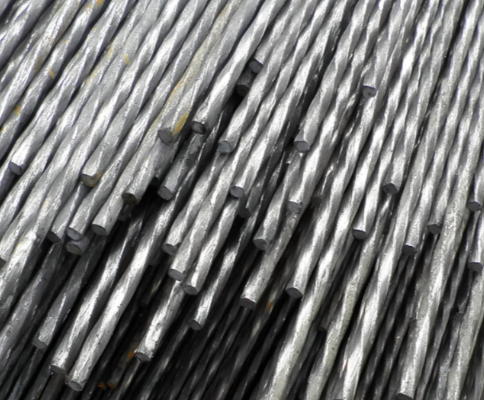
Carbon steel rebar, sometimes just called black bar, is the everyday workhorse. It’s reliable almost everywhere, though it’s not a great fit for humid or wet climates since it rusts faster there.
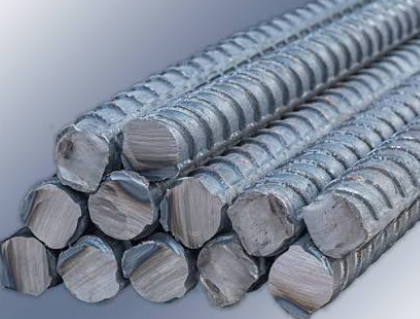
Epoxy-coated rebar takes that same black bar and sprays a protective coating over it. That coating buys serious resistance to corrosion, which is exactly why you’ll spot it on bridges and coastal builds. Just don’t drop it around too much, since the coating can chip.
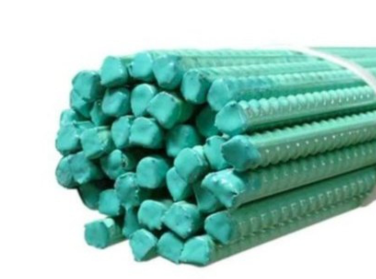
Stainless steel rebar sits at the top of the price range, but it earns it. Barely any rust, barely any maintenance. Builders usually save it for spots where fixing things later would be a nightmare.
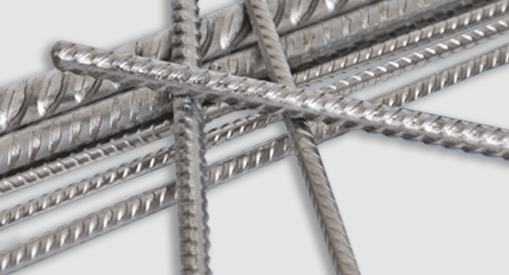
Galvanized rebar wears a zinc coating that holds up noticeably better than plain carbon steel in wet or humid spots, though naturally, it costs a bit more too.
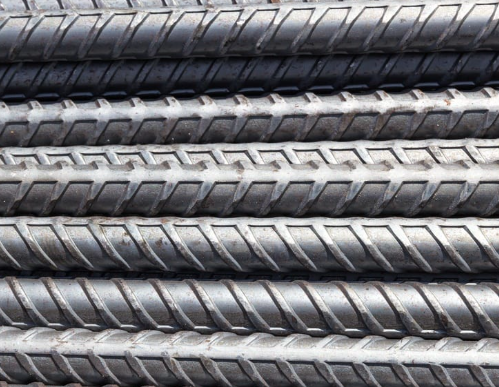
European rebar leans on manganese, which makes it easy to bend into shape. It’s really not built for earthquake zones or extreme storms though.
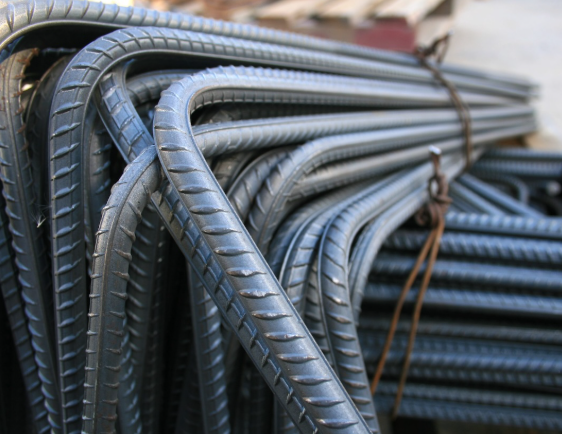
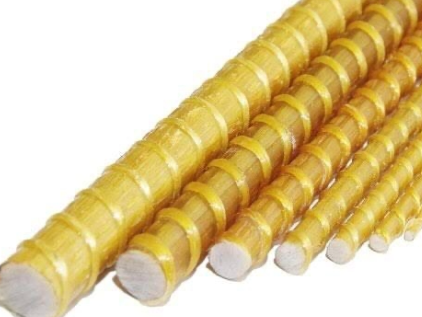
GFRP rebar, short for glass-fiber-reinforced polymer, breaks the mold completely since it isn’t even metal. It won’t rust, ever. It’s lighter to move around, and it actually beats steel on tensile strength. It also doesn’t conduct heat or electricity well, which comes in handy for certain builds.
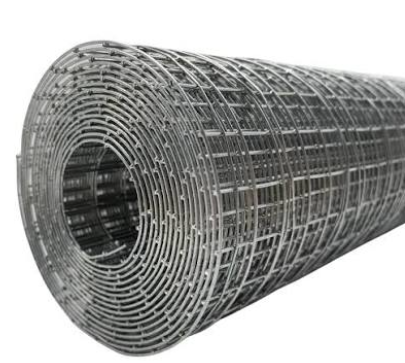
Welded wire fabric looks like a grid or mesh, made from wires welded together at right angles. You’ll usually find it in slabs, sidewalks, and pavement, anywhere a big flat area just needs a light layer of reinforcement.
Bottom Line
There’s no single “best” type of rebar. It really just depends on the project in front of you, the weather it’ll face, and how long it needs to hold up. Whether it’s plain old mild steel or top-shelf stainless, they’re all working toward the same goal: keeping concrete strong for the long haul.